Permanent Lighting
Will Your HOA Allow Permanent Lighting?
New Age Lights of Chattanooga • October 2026 • Chattanooga, TN • 7 min read
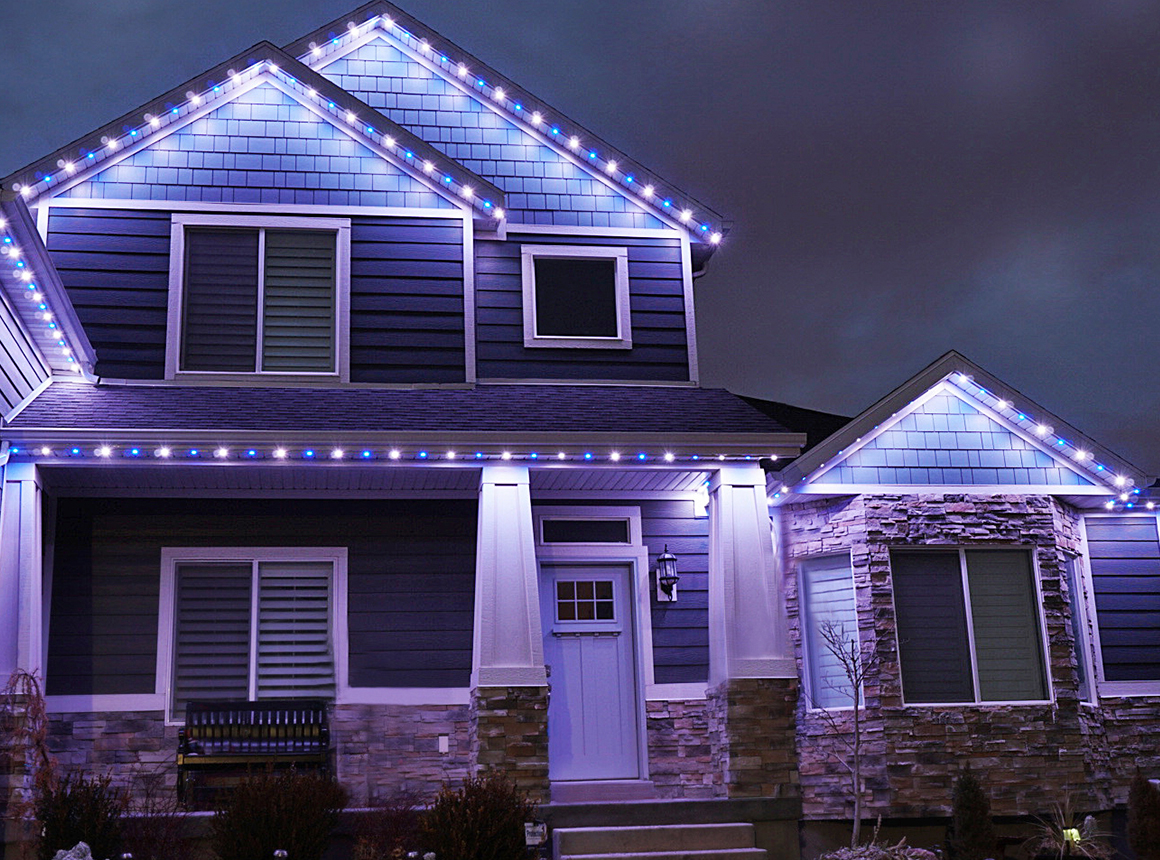
Short Answer: Most HOA covenants were written before permanent lighting existed, so they rarely address it directly. What they usually contain are rules about exterior alterations requiring architectural review, seasonal decoration timelines, and sometimes nuisance lighting provisions. That combination means the answer is usually not a flat no, it is that you should submit for approval. Systems presented as architectural accent lighting with a restrained everyday setting are approved far more often than ones presented as permanent Christmas lights.
This question comes up on most consultations in the newer communities around Ooltewah, Cleveland, and the developments spreading out from Chattanooga, and the honest answer is that it depends on documents most homeowners have never read closely.
The good news is that outright prohibitions are rare. The complication is that ambiguity is common, and how you approach it affects the outcome. Here is how to work through it.
Your Covenants Probably Do Not Mention It
Permanent programmable lighting is a recent product. Most covenants governing neighborhoods in this area were drafted years or decades before it existed, so there is usually no provision addressing it by name.
What exists instead are three categories of language that may apply, and reading them is the first step.
Exterior alteration provisions typically require architectural review committee approval for changes to the exterior of a home. Whether a lighting channel mounted on fascia constitutes an exterior alteration is a judgment call, and most boards would say it does.
Seasonal decoration provisions frequently set windows for when holiday decorations may be displayed, often something like a period before and after the holiday. These were written about inflatable snowmen and light strings, and whether they apply to a permanently installed architectural fixture is exactly the ambiguity at issue.
Nuisance or light trespass provisions, where they exist, address lighting that disturbs neighbors. Those are usually about brightness and spill rather than about the existence of a fixture.
How You Frame It Matters
This is the practical advice that changes outcomes more than anything else, and it is not a trick because it is also accurate.
Presented as permanent Christmas lights, a system sounds like a decoration that never comes down, which runs straight into seasonal decoration provisions and into a board's instinct about neighborhood appearance.
Presented as permanent architectural accent lighting, the same system sounds like what it actually is. A color matched channel following the rooflines, running warm white at low brightness as everyday exterior lighting, with the capability to change color for specific occasions.
The second description is the honest one for a well designed installation, and it lands very differently with a review committee. It also commits you to actually operating the system that way, which is the reasonable trade.
Emphasizing the daytime appearance helps. A channel matched to the fascia reads as trim, and boards concerned about visual clutter respond to that.
What to Submit
Architectural review committees generally respond better to a complete submission than to a question, and assembling one is straightforward.
Include a description of the product, meaning the channel material, the color matching to your trim, and the fact that it is a permanently installed fixture rather than seasonal decoration.
Include daytime photographs of a comparable installation, which is the image that addresses most concerns. A board member picturing multicolor bulbs on a roof will respond differently to a photograph of a trim line.
Include a statement of how it will be operated. Warm white at low brightness as the everyday setting, with color used for specific holidays and occasions. Putting that in writing addresses the concern before it is raised.
Include the elevations being lit and a rough diagram if you can. Boards approve defined proposals more readily than open ended ones.
The Objections Boards Actually Raise
Three concerns come up repeatedly and each has a reasonable answer.
The first is that the neighborhood will end up with houses running rainbow displays every night. That is a legitimate concern about a real failure mode, and the answer is the operating commitment above. Some boards approve with a condition limiting color use to defined periods, which is a workable compromise.
The second is visual clutter during the day. The answer is color matching and daytime photographs, and it usually resolves the concern immediately.
The third is precedent. Boards worry about approving something they will have to approve for everyone. That is genuinely their job to consider, and the useful response is that an approval with conditions sets a workable standard rather than an open door.
None of these are unreasonable positions. Treating the board as an obstacle tends to go worse than treating them as people with a legitimate interest in how the street looks. Homeowners who arrive with a complete submission and a stated operating commitment generally get approved. Homeowners who install first and ask later generally do not enjoy the process.
Timing Your Submission
Architectural review committees meet on a schedule, and that schedule is the constraint people run into.
Many boards meet monthly, some quarterly, and a submission that misses a meeting waits for the next one. A homeowner who decides in early November to have lighting before Christmas, and whose board meets once a month, may not get approval in time regardless of installer availability.
October is therefore the practical month to submit, and it is worth doing before you finalize an installation date rather than after. Booking a crew for a date you cannot get approval for wastes a slot that was hard to get.
If your board has a process for administrative approval of minor items between meetings, ask whether this qualifies. Some do, and a color matched channel following existing rooflines is a reasonable candidate.
If There Is No HOA
Plenty of properties around Chattanooga, particularly the older neighborhoods and the more rural parcels out toward McDonald and up the ridges, have no covenants at all. That removes the approval question and not the neighbor question.
A roofline system is visible to everyone around you in a way landscape lighting is not. On a sloped lot, where homes look down on or across at each other, that visibility is greater still.
The considerations that matter are brightness, hours, and color. A restrained warm setting running from dusk until a reasonable hour is unobjectionable and generally reads as an improvement to the street. A high brightness display running all night affects the people around you whether or not they say anything.
Aiming matters too. Fixtures recessed in channel and directed along the building rather than outward keep light on your house instead of in a neighbor's window.
Setting a schedule that turns the system off at a sensible hour rather than running until dawn is a small courtesy that costs nothing.
Local Regulation
Beyond covenants, municipal rules occasionally apply and they vary.
Some jurisdictions have outdoor lighting ordinances addressing brightness, glare, or light trespass onto neighboring property, generally aimed at commercial installations but sometimes written broadly.
Because these differ between the City of Chattanooga, Hamilton County, Bradley County, and the various municipalities in the area, and because they change, checking with your own jurisdiction is worth the few minutes rather than relying on a general article.
In practice, residential systems operated at reasonable brightness rarely run into municipal issues. Where it does come up is commercial properties and unusually bright residential installations, particularly ones aimed outward rather than along the building. If your property sits on a ridge where the elevation is visible across a valley, that is worth thinking about even absent any rule.
What to Do Next
Find your covenants and read the sections on exterior alterations, seasonal decorations, and lighting. Most people have a copy from closing and have never opened it.
If architectural review applies, submit before scheduling installation rather than after. Retroactive approval is a considerably worse position than prospective approval, and a board asked to bless something already installed frequently digs in.
Frame the submission as architectural accent lighting, include daytime photographs, and state how the system will be operated. Those three things carry most submissions.
Whether or not you have an HOA, decide on a restrained everyday setting and a sensible off time. It is better design and it keeps the street on your side.
To discuss a design and get materials for an HOA submission, contact New Age Lights of Chattanooga at 423-528-1240 or visit newagelights.com. We serve Chattanooga, McDonald, Cleveland, Ooltewah and the surrounding communities.