Permanent Lighting
How to Choose a Permanent Lighting Installer
New Age Lights of Chattanooga • October 2026 • Chattanooga, TN • 7 min read
Short Answer: Permanent lighting has grown quickly enough that plenty of companies added it recently without much background in exterior work. Since the product is fastened permanently to your roof structure, the things worth vetting are how fascia penetrations are sealed, what the channel and fixtures are made of, whether the warranty covers labor or only parts, and whether the company will still exist to honor it. Ask to see completed installations in daylight rather than only in glamour shots at night.
Permanent lighting has gone from a niche product to something several companies in every market offer, and that growth happened fast. Some of those companies have deep exterior and electrical backgrounds. Some added the service last year because demand appeared.
Because this product gets fastened permanently to your roof structure and is expected to last a decade or more, the vetting matters more than it would for a service that leaves no trace. Here is what to actually ask.
Ask to See Work in Daylight
This is the single most useful request and almost nobody makes it.
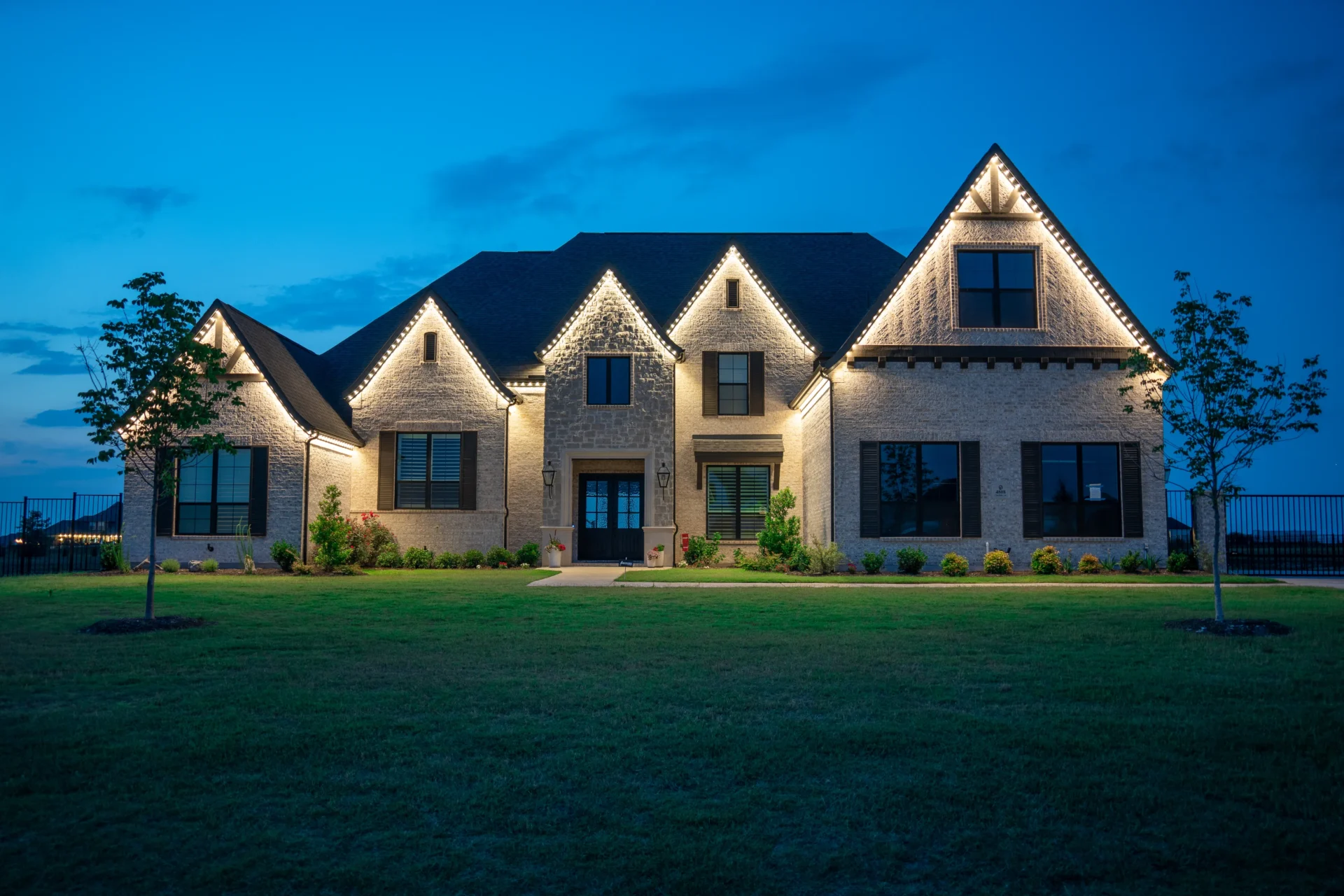
Every company's portfolio is night photography, because that is when the product is impressive. Night photos tell you nothing about installation quality, since a crooked channel and a straight one both disappear behind the light.
Daylight is where the work shows. Is the channel running straight and parallel to the architectural line, or does it waver with the fascia board. Are corners mitered and terminations capped, or is there a visible cut edge. Is the channel color actually matched to the trim, or approximately matched. Is wiring concealed or draped.
A company confident in its work will offer daylight examples or an address you can drive past. Reluctance is informative.
If you can look at an installation that is several years old rather than several weeks old, better still. That tells you how the finish has held up and whether fasteners have stained the fascia.
The Penetration Question
Ask specifically how fascia penetrations are sealed, and listen for a specific answer rather than a reassurance.
Mounting a channel means putting fasteners through a surface whose job is keeping water out of your roof structure. In a climate with the rainfall and humidity we get through the Tennessee Valley, plus winter freeze and thaw cycling, an unsealed or poorly sealed penetration works loose over years.
Fastener material is part of the same question. Corrosion resistant hardware holds up. Plated fasteners rust, stain the fascia beneath them, and eventually fail, and by the time you notice the staining the fastener has been deteriorating for a while.
An installer who has thought about this will answer readily and in detail. One who has not will talk about the lights instead, which is the tell.
What the Hardware Is Made Of
Product quality varies considerably within the category and it is not obvious from a demonstration.
Channel material is the first item. Extruded aluminum holds its shape and finish indefinitely. Plastic channel is cheaper, becomes brittle under UV exposure, and discolors, and southeastern summers are hard on it.
Fixture sealing is the second. Diodes and connections live permanently outdoors, and the ingress protection rating should be stated rather than implied. Ask for the number.
Whether individual sections can be replaced is the third and it is frequently overlooked. A system where a failed segment can be swapped is serviceable. One where a failure means replacing an entire run is a different proposition over ten years.
Ask what brand and system is being installed and look it up independently. Some installers work with established manufacturers and some with whatever is available at the best margin.
Read the Warranty Rather Than the Number
Warranty length gets advertised and warranty terms determine whether it means anything.
The distinction that matters most is parts versus labor. A parts only warranty on a product mounted at roof height still leaves you paying for access, and access is the expensive part. A warranty covering both is a meaningfully different promise.
What is covered is the second question. Diodes, channel, controller, transformer, and wiring may carry different terms, and a headline number frequently applies to only one component.
The process matters too. What happens when a section fails, how long does a service call take, and is there a trip charge. A warranty that is technically valid and practically difficult to invoke is worth less than it appears.
And the warranty is only as good as the company behind it, which leads to the next point.
Will They Be Here in Five Years
This is uncomfortable to ask directly and it is the most consequential question on the list.
A ten year warranty from a company that has been operating for eight months is a statement of intent rather than a guarantee. The category's rapid growth means some of the companies offering it now will not be operating in a few years, and when they go, the warranty goes with them.
Reasonable things to establish. How long the company has been in business, whether this is their primary service or something recently added, whether they have a physical location, and whether the manufacturer's warranty is separate from the installer's and would survive the installer.
That last point is genuinely useful. Where a system comes from an established manufacturer, the product warranty may be independent of who installed it, which provides a floor even if the installer disappears.
Local presence matters for service in a way it does not for the initial install. A company based in the area will come out for a failed section. One that sent a traveling crew may not.
Insurance and Licensing
Unglamorous and worth confirming, because this is ladder and roof work on your property.
General liability coverage protects you if something is damaged. Workers compensation matters if someone is injured on your roof, and on a two or three story elevation in this terrain that is not a theoretical concern.
Ask for certificates rather than assurances. A legitimate company produces them without friction.
Electrical licensing requirements vary by jurisdiction and by how the system connects to power. Asking how the installer handles the connection, and whether any of the work requires licensed electrical trades locally, is a fair question.
Pressure Is a Signal
Worth naming because the sales approach in this category varies widely.
Legitimate urgency exists in fall. Installation schedules genuinely fill ahead of the holidays, and a company saying so in October is describing reality.
Manufactured urgency looks different. Discounts expiring the same day, a price that drops substantially when you hesitate, or pressure to sign before you have seen daylight examples are all worth stepping back from. A permanent installation on your roof is not a decision that improves under time pressure.
A quote should be itemized enough that you can see what you are buying. Linear footage, fixture count, controller and transformer, and what commissioning includes.
What a Good Consultation Feels Like
The sales visit itself is data, and it is worth paying attention to what gets discussed.
A good consultation spends most of its time on your house rather than on the product. Which architectural lines define the elevation, how the home is viewed from the street or the approach, what your everyday setting should look like, and what you would realistically use the system for beyond December.
A weaker one spends most of its time on the app and the color demonstration. Sixteen million colors is a specification rather than a design conversation, and a company leading with it is selling capability rather than a result.
The other thing to listen for is whether anyone advises you against anything. An installer who suggests lighting fewer rooflines, or points out that a rear elevation nobody sees is not worth the linear footage, is giving you information against their own short term interest. That tends to correlate with the rest of the work.
What to Do Next
Get at least two quotes and ask each the same questions so the answers are comparable. Penetration sealing, fastener material, channel material, fixture rating, warranty parts and labor, and company history.
Ask each for a daylight example you can look at, ideally one that has been installed for a few years. That single request separates companies faster than anything else you can do.
Confirm the transformer will be sized with capacity for a future phase, since most homeowners who start with a front elevation later want more.
Read the warranty before signing rather than after, paying attention specifically to whether labor is covered.
To discuss your project and see examples of completed work, contact New Age Lights of Chattanooga at 423-528-1240 or visit https://newagelights.com/new-age-lights-of-chattanooga/. We serve Chattanooga, McDonald, Cleveland, Ooltewah and the surrounding communities.