Christmas Lighting
DIY vs Professional Christmas Lights in Chattanooga: Safety, Cost and What Usually Goes Wrong
New Age Lights • September 2026 • Chattanooga, TN • 8 min read
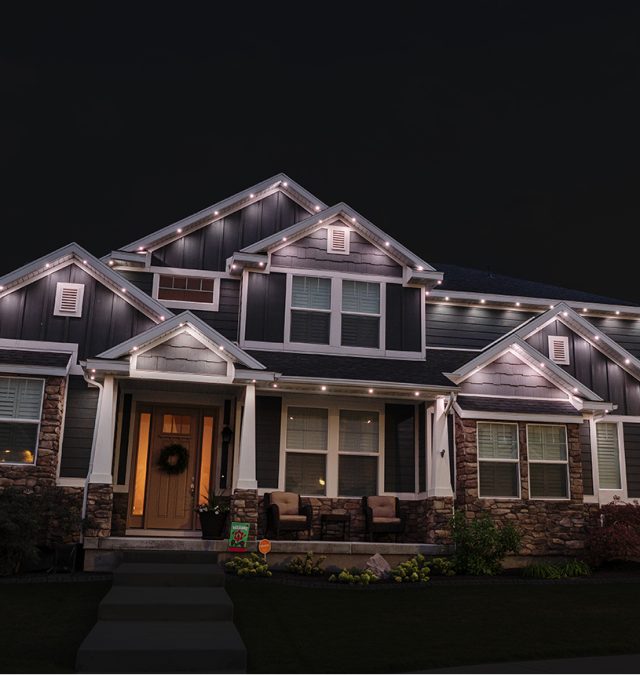
The ladder problem
Every year, ladder falls send thousands of people to emergency rooms during the holiday season. Most were not doing anything unusual: standing on an extension ladder, reaching sideways to hook a clip, on a day colder and damper than it looked.
Chattanooga adds height and terrain to that picture. The housing in Ooltewah, East Brainerd and Collegedale is mostly two-story fronts on rolling ground, and the lots often fall away at the back, so a rear roofline that reads as a second story from the street is closer to a third from the yard. On Signal Mountain and Lookout Mountain the ground is rarely flat and usually wooded, roofs are broken by dormers and additions, and the mountain runs colder than the valley with ice that sits longer in the morning. None of that is an extension ladder job. Our crews work those elevations from lifts, with access settled on the site visit rather than on install morning. That is a different proposition from a homeowner on a ladder in December.
The rule is simple. If any part of the run would need you above the first story on a ladder, hire the height.
What a Tennessee Valley winter does to DIY hardware
December here is not a dry cold. The month averages a high near 52°F and a low near 34°F, and winter is the wettest part of the year. A display goes up wet, freezes overnight and thaws by lunchtime, for weeks on end. That freeze-thaw cycle, not the cold on its own, is what fails a DIY display.
- Generic clips work loose. A one-size hardware-store clip does not match the profile of a seamless gutter in Ooltewah or the shallow, interrupted fascia of a Hixson ranch. Water gets behind it, freezes, expands and lifts it a fraction each night. By mid-January a section is hanging in a loop.
- Retail sockets fail. Big-box strings are not built for weeks of saturation and freezing. A dead half-string in the third week of December is the classic result, and it is always the section highest off the ground.
- Connections that were not sealed find water. Every plug-to-plug join on a run is a place for water to sit. Professional runs use fewer joins and seal the ones that remain.
- Extension cords across lawns. They sit in wet grass, get stepped on, and trip breakers. Power should run to a sensible exterior point.
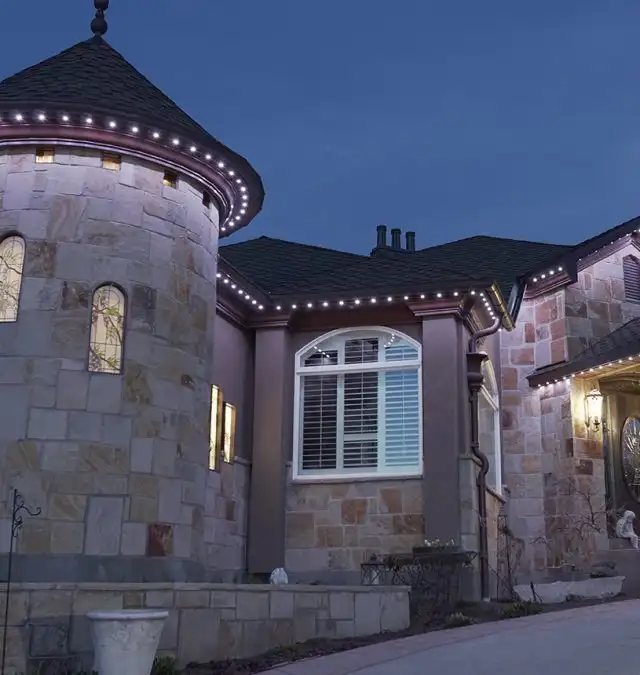
Homes with tile or slate roofs in North Chattanooga and Riverview, and the historic houses of St. Elmo and Fort Wood, add another failure mode: there is no shingle edge for a standard clip to grip, so DIY often ends in staples or nails through trim that was never meant to take them. A professional works off the fascia and gutter edge and plans around the porch detail.
The real cost of DIY
People compare the price of a box of lights to the price of a professional program and stop there. The honest comparison includes everything on the DIY side of the ledger.
| DIY line item | What it involves | Recurs? |
|---|---|---|
| Lights | Enough retail C9 or mini strings to cover the roofline, plus spares for the strings that fail | Partly, as strings die |
| Clips | Gutter clips, shingle clips or both, matched to your edge if you can find the right profile | Yes, as they break or blow off |
| Timers and power | Outdoor timers, rated extension cords, possibly a splitter or an exterior outlet you do not have yet | Occasionally |
| Ladder or lift | An extension ladder tall enough for a two-story front, or a lift rental for a walkout rear or ridge lot | Rental recurs |
| Your time | A weekend afternoon to install on a simple house, longer on a tall one, plus the same again for takedown in January, plus untangling and testing in November | Every year |
| Repairs mid-season | Getting back up the ladder when a section goes dark, in December weather | Most years |
| Storage | Garage space and boxes, and the strings that come out crushed next year | Every year |
First-year DIY on a two-story front commonly adds up to several hundred dollars in materials before your time is counted, and retail strings often need replacing within a few seasons. The gap to a professional roofline program is narrower than the sticker price suggests.
What professional installation costs and includes
Typical turnkey programs across the industry run about $2.50 to $8 per linear foot of roofline. A roofline-only front usually lands between $700 and $1,500, and a full display with tree wraps, wreaths and garland runs $2,000 to $5,000 or more. Renewal years are cheaper than year one because the product exists and the measurements are on file.
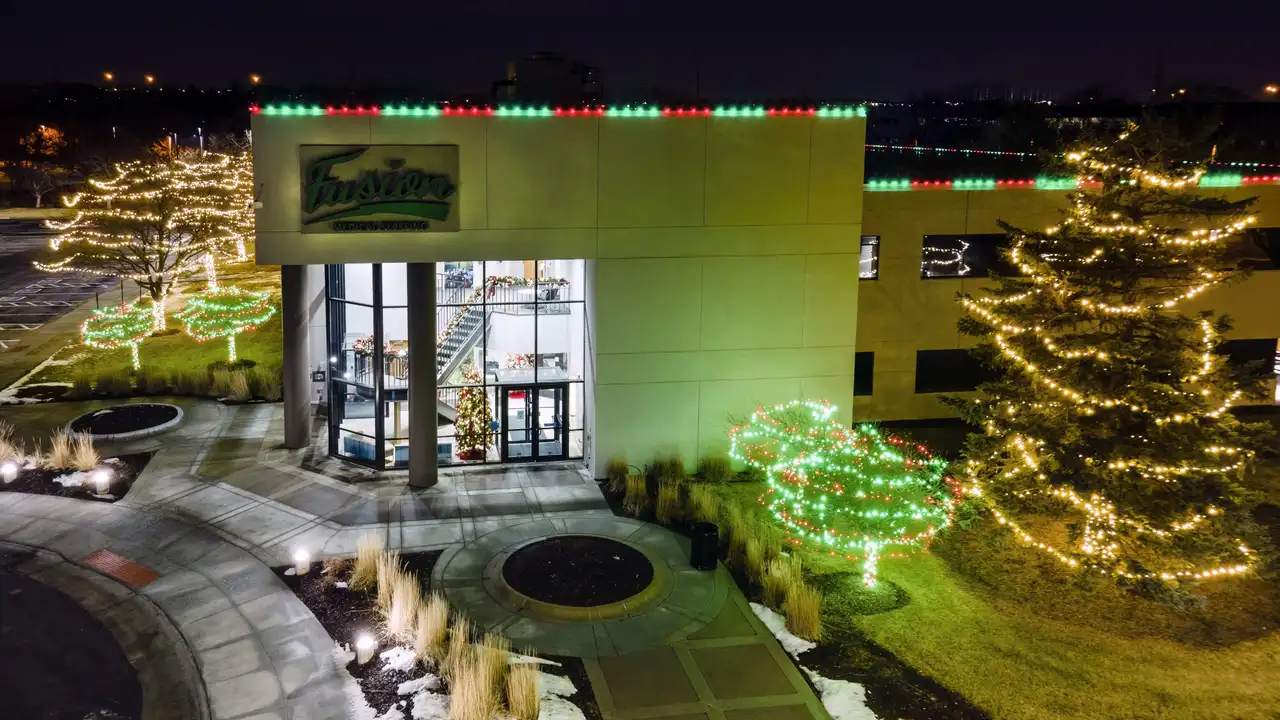
For that price a New Age Lights program includes a free on-site design consult and a fixed quote, commercial-grade C9 LED runs cut and fitted to your roofline on site, clips matched to your shingle, gutter or fascia with nothing through roofing, insured crews working from lifts where the height requires it, a timer or app schedule set before we leave, in-season service if a section goes dark, takedown in January and offsite storage. The full list is on our Christmas light installation page, and the pricing detail is in our Chattanooga Christmas light installation cost guide.
What usually goes wrong with DIY
These are the calls we get in December from people who started the season on their own.
- The string ran out three feet from the corner. Retail lengths are fixed. Runs either fall short or bunch at the turn. A professional run is cut to end where the fascia ends.
- The top run went dark first. The highest section is the wettest, the coldest and the hardest to reach. It is also usually the one on the cheapest string because the good ones went on the porch.
- The staples are still in the trim in March. On older homes with no shingle edge, DIY installs end in staples through painted fascia or porch trim. The holes outlast the season.
- The breaker trips every evening. Too many strings on one outlet through a chain of extension cords.
- The clips are in the flower bed by New Year. Freeze-thaw and a wrong-profile clip.
When DIY genuinely makes sense
There are plenty of Chattanooga houses where doing it yourself is the right answer, and we will say so at a consult. DIY is a reasonable choice when:
- The house is single-story with gutters at step-ladder height on flat ground, which describes many of the mid-century ranches in Hixson and Red Bank and the older streets around downtown Cleveland.
- The run is short. A bungalow porch line and a couple of windows is an afternoon, not a project.
- You are lighting ground-level elements: shrubs, low trees, porch rails, a mailbox, a walkway.
- You enjoy the job, have a dry afternoon to do it, and are willing to go back up when a string fails.
- You accept that the result will look like retail strings, and you are fine with that.
A common middle path: hire the roofline, do the ground yourself. The pro handles height, fixings and service; you handle the wreath and the shrubs.
How do professionals install Christmas lights?
A crew measures the roofline on site and confirms where the power will come from. Commercial-grade C9 LED runs are cut to fit each eave, gable and ridge. Clips are chosen for the actual edge, whether that is shingle, gutter or fascia, and nothing goes through roofing material. Tall elevations are worked from a lift. Every section is tested, the timer or app schedule is set, and the property is left as it was found. In January the same crew takes the display down on a dry day, labels and inspects it, and stores it until next season. Twelve questions to ask any installer about this process are in our guide to hiring a Christmas light installer in Chattanooga.
The third option
If the reason you are weighing DIY against a pro is that you are tired of the annual ladder question altogether, there is a third answer. Permanent roofline lighting is a slim track fixed under the eave that stays up year round, reads as trim in daylight and runs warm white, holiday color or nothing at all from an app. It suits the long straight fascia of the Ooltewah and East Brainerd subdivisions particularly well, and it removes ladder work from the mountain lots entirely. Our residential lighting page explains how it works, and we will tell you honestly at a consult whether your roofline is a better fit for seasonal or permanent.
Frequently asked questions
Is it safe to put Christmas lights on my roof myself?
On a reachable single-story home with dry footing, many people do it safely every year. On a two-story front, a walkout rear or a steep, wooded ridge lot, the risk changes. Ladder falls send thousands of people to emergency rooms every holiday season, and Chattanooga's December is wet, with overnight freezes that leave decks, drives and roofs slick in the morning. If you would need an extension ladder above the first story, hire the height.
How much does it really cost to do Christmas lights yourself?
More than the lights. Add quality clips matched to your gutter or shingle, outdoor timers, rated extension cords and replacement strings when sockets fail, plus several hours over one or more weekends and the same again for takedown. First-year DIY on a two-story front commonly adds up to several hundred dollars in materials before your time is counted, and the retail strings often need replacing within a few seasons.
Why do my clips keep falling off in January?
Freeze-thaw. Winter is the wettest season in the Tennessee Valley, and a display gets soaked, freezes overnight near 34°F and thaws by afternoon for weeks. That cycle works generic hardware-store clips loose and finds any connection that was not sealed. Clips sized to your actual gutter and fascia, fixed to structure rather than through shingles, hold through it.
When does DIY make sense in Chattanooga?
When the run is short, reachable and simple: a single-story ranch in Hixson or Red Bank, a porch rail, shrubs and low trees, or a bungalow front where everything is within reach of a step ladder on flat ground. If you enjoy the job and can do it on a dry afternoon, DIY is a reasonable choice for those houses.
What does a professional Christmas light installation include?
Design, commercial-grade C9 LED runs cut to your roofline, clips matched to your edge with nothing through roofing, installation from lifts where height requires it, a timer or app schedule, in-season service if a section goes dark, takedown in January and offsite storage. Typical turnkey programs run about $2.50 to $8 per linear foot. New Age Lights quotes a fixed price after a free on-site consult.
Hire the height, keep the fun
Tell us what you want lit and we will tell you honestly which parts are worth paying for. Free on-site consult, fixed quote, insured crews, and nobody in your family on a ladder in December.
Get a free quote or call (423) 528-1240.